

Bulk purchasing hardwood flooring benefits every buyer who plans ahead, delivering lower unit costs, guaranteed product consistency, and fewer supply chain surprises. Retail hardwood flooring ranges from $3.00 to $14.00 per sq ft, while wholesale pricing can drop to $1.95 per sq ft at volume. That gap is not accidental. It reflects a structured pricing system that rewards buyers who commit to larger orders. Quality Hardwoods of Michigan, Inc has served contractors and homeowners across Michigan for over 40 years, and the pattern is consistent: buyers who understand volume pricing before they order save significantly more than those who react to project needs one shipment at a time.
What are the bulk purchasing hardwood flooring benefits by volume tier?
Volume discounts in hardwood flooring follow a tiered structure. The more you order, the lower your per-square-foot cost. Wholesale pricing tiers can reach up to 40% off retail for full container loads. That means a contractor ordering 5,000 square feet pays a fundamentally different rate than a homeowner picking up 200 square feet at a retail outlet.
| Volume Tier | Typical Order Size | Discount Range | Approx. Price Range (per sq ft) |
|---|---|---|---|
| Small retail | Under 500 sq ft | 0% | $3.00–$14.00 |
| Mid-volume wholesale | 500–2,000 sq ft | 10%–20% | $2.50–$10.00 |
| High-volume wholesale | 2,000–5,000 sq ft | 20%–35% | $2.00–$7.50 |
| Full container load | 5,000+ sq ft | Up to 40% | $1.95–$6.00 |
Homeowners tackling a single large renovation can access mid-volume pricing with the right supplier. Contractors and developers running multiple jobs simultaneously qualify for the deepest discounts by consolidating orders. Buying unfinished hardwood in bulk and sourcing mill-direct can reduce costs by 20%–50% compared to standard distributor pricing, with prices as low as $1.50 per sq ft for common species.
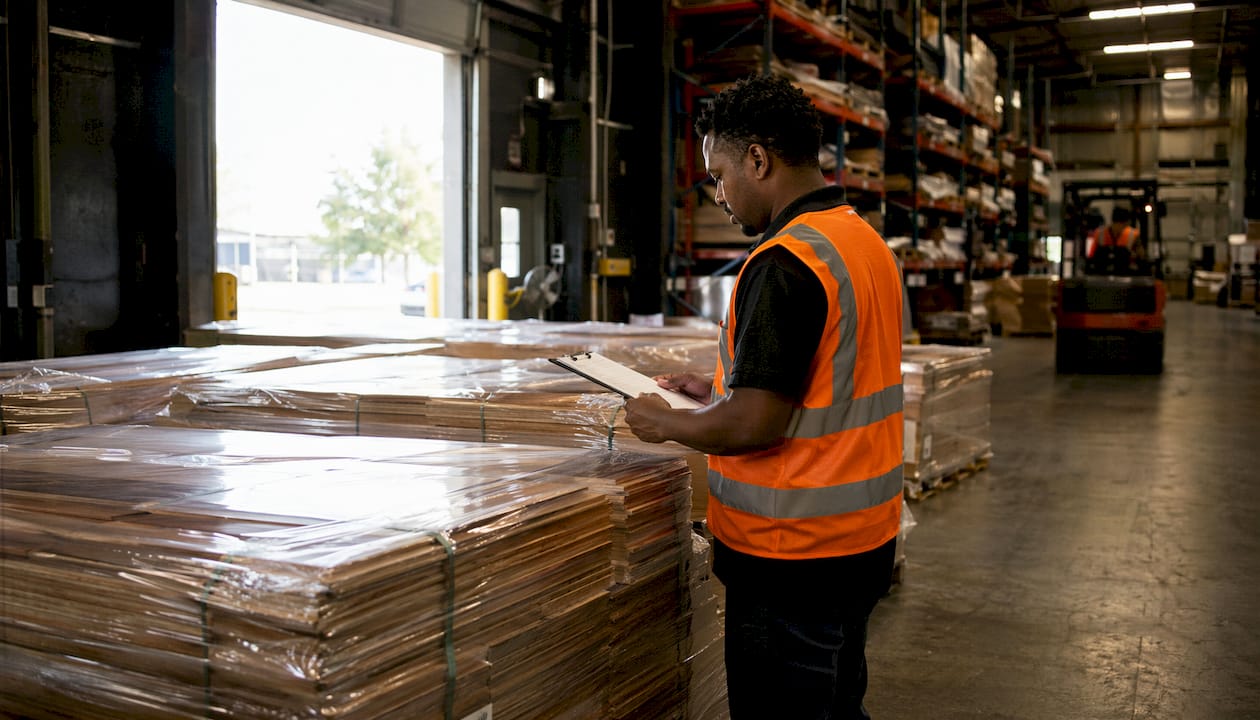
The key distinction between tiers is not just price. Higher tiers also come with better freight terms, priority fulfillment, and access to a wider species selection. A contractor who consistently orders at the container level builds a supplier relationship that pays dividends beyond the per-unit rate.
Pro Tip: Request a written quote at two or three volume levels before committing. The price difference between 1,800 and 2,000 square feet can sometimes push you into the next discount tier and save more than the cost of the extra material.
How does bulk buying protect quality and consistency?
Uniform color and grain across an entire floor is not guaranteed when you order in multiple smaller batches. Bulk purchasing ensures product consistency by locking in a single dye lot and production run, which is critical for multi-unit developments and phased home renovations. When you reorder weeks or months later, the manufacturer may have shifted the finish formula, changed the wood source, or discontinued the product entirely.
The quality advantages of ordering in bulk include:
- Dye lot uniformity. A single large order comes from one production run. Color variation between planks stays within a controlled range.
- Grade consistency. Bulk orders allow buyers to specify a single grade, such as Select or No. 1 Common, across the entire shipment. Mixed grades from separate orders create visible inconsistencies after installation.
- Reduced defect risk. Larger orders from Quality Hardwoods of Michigan, Inc go through a single quality review. Multiple small orders multiply the chances of receiving a batch with elevated defect rates.
- Protection against discontinuation. Flooring lines get retired regularly. Ordering enough material upfront, plus a small overage, eliminates the risk of needing to match a discontinued product for repairs.
For contractors managing large-scale flooring renovations across multiple units or phases, consistency is as valuable as cost savings. A mismatched floor in one unit of a condo development creates warranty claims and rework costs that far exceed any savings from piecemeal ordering.
What logistical factors affect bulk hardwood flooring orders?
Ordering in bulk creates savings at the unit level, but those savings disappear quickly if you ignore the logistics. Three factors matter most: waste allowance, storage capacity, and delivery terms.
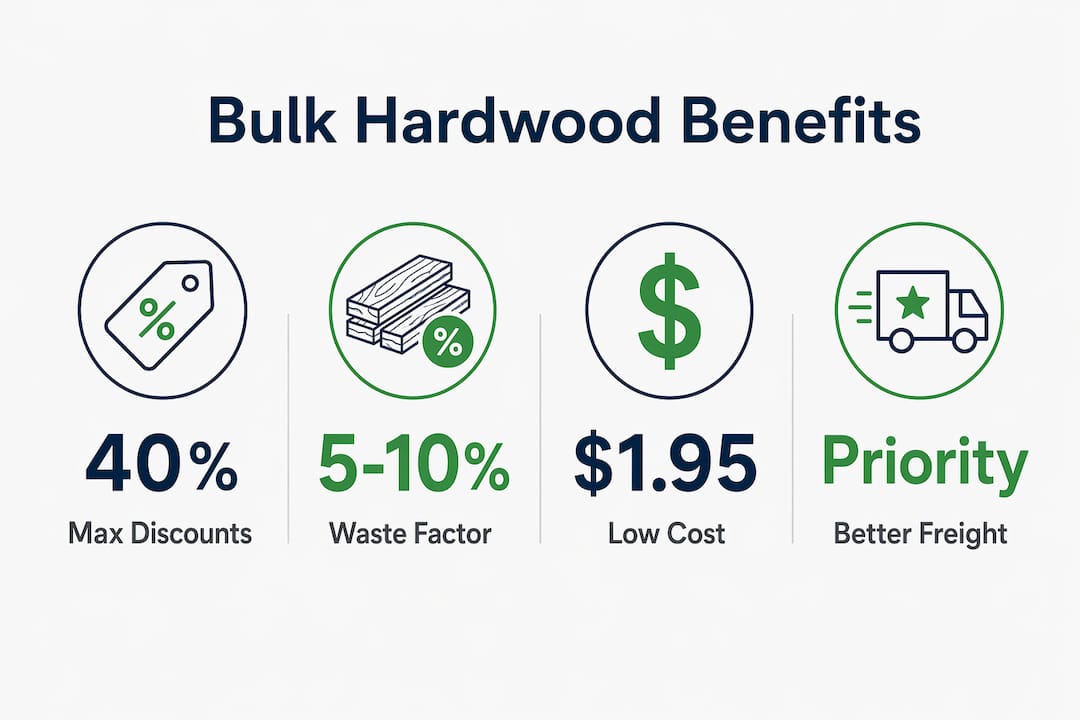
Plan for a 5%–10% waste factor
A standard waste factor of 5%–10% covers cutting losses and defects on any hardwood flooring project. Complex room shapes, diagonal installations, and herringbone patterns push waste toward the higher end of that range. Order below the waste threshold and you risk running short mid-project, which forces a reorder at retail pricing.
Understand your delivery terms before you commit
- Confirm whether your delivery address qualifies as a commercial dock or a residential address. Residential deliveries often carry lift-gate and inside delivery fees that can offset a meaningful portion of your bulk discount.
- Ask about freight consolidation options. Shipping a partial pallet costs more per square foot than a full pallet or truckload. Consolidating multiple product types into one shipment reduces per-unit freight costs.
- Clarify lead times. Bulk orders from mill-direct sources can take longer to fulfill than in-stock distributor orders. Build that timeline into your project schedule.
- Get delivery terms in writing. Verbal agreements on freight costs are a common source of disputes that erode savings.
Manage storage and capital carefully
Bulk orders tie up cash and require dry, climate-controlled storage. Hardwood flooring is sensitive to humidity fluctuations, and improper storage causes warping and cupping before installation even begins. Contractors who match supplier channel to project size avoid the trap of buying more than they can store or install within a reasonable window.
Pro Tip: If you lack a climate-controlled warehouse, negotiate a phased delivery schedule with your supplier. You get the bulk pricing locked in at order time, but material arrives in installments that match your installation schedule.
When does bulk buying hardwood make financial sense?
Bulk purchasing is not the right move for every project. The financial case depends on project size, timing, and your ability to absorb inventory.
The clearest financial threshold: buying in bulk makes sense when you will use 5,000 square feet within 10 months. Below that threshold, the carrying costs of storage and tied-up capital can erode the per-unit savings. Above it, the math strongly favors bulk.
Situations where bulk buying hardwood delivers clear advantages:
- Multi-unit residential projects. Apartment buildings, condo developments, and townhome communities all benefit from a single large order that covers every unit with matching material.
- Contractors with pipeline visibility. A contractor who knows they have three flooring jobs scheduled over the next six months can consolidate those orders into one bulk purchase and capture the volume discount across all three.
- Homeowners renovating multiple rooms or properties. A homeowner redoing the first floor now and planning the second floor in four months should order both phases together. The savings on the second phase often pay for the storage cost.
- Closeout and clearance opportunities. Combining closeout pricing with a bulk discount can produce savings of 40%–50%. These deals require flexibility on species or finish, but the numbers are hard to ignore.
Situations where caution is warranted:
- Small single-room projects under 300 square feet gain little from bulk pricing and face disproportionate storage and freight costs.
- Buyers without confirmed project timelines risk holding inventory that becomes obsolete or damaged before installation.
- Homeowners who have not finalized their floor plan should not order in bulk. Changing a room layout after ordering can leave you with significant unusable overage.
The total cost of ownership matters more than the unit price. Durability, installation ease, and shipping reliability all factor into whether a bulk purchase actually saves money over the life of the project.
Key Takeaways
Bulk purchasing hardwood flooring delivers the strongest returns when buyers plan order volume, storage, and delivery logistics before committing, not after.
| Point | Details |
|---|---|
| Volume discounts reach 40% | Full container loads can cut per-sq-ft costs to $1.95, versus $14.00 at retail. |
| Consistency protects quality | A single bulk order locks in one dye lot and grade, preventing mismatched reorders. |
| Waste factor is non-negotiable | Always add 5%–10% to your measured square footage to cover cuts and defects. |
| Delivery fees can erase savings | Confirm freight terms upfront; residential surcharges and lift-gate fees add up fast. |
| Use 5,000 sq ft within 10 months | That threshold is the practical benchmark for bulk buying to make financial sense. |
Why I think most buyers focus on the wrong number
After working in the flooring industry for years, the single most common mistake I see is fixating on the per-square-foot price while ignoring everything else. A buyer locks in $2.10 per sq ft on oak strip, feels great about the deal, then gets hit with a $400 residential delivery surcharge, stores the material in an unconditioned garage over a Michigan winter, and ends up with 200 square feet of cupped planks that cannot be installed. The “savings” evaporated before a single board hit the floor.
The buyers who consistently come out ahead treat bulk purchasing as a logistics problem, not just a pricing problem. They confirm freight terms before signing anything. They have a storage plan that accounts for humidity. They know their installation schedule down to the month. When those three things are in place, the cost savings are real and durable.
Supplier relationships also matter more than most buyers admit. A contractor who orders consistently from Quality Hardwoods of Michigan, Inc does not just get better pricing over time. They get faster answers when a product is running low, advance notice on closeout deals, and a supplier who understands their project mix. That relationship has real dollar value that never shows up on a per-square-foot quote.
My honest advice: before you place a bulk order, write down your storage plan, your delivery address type, and your installation timeline. If any of those three is unclear, wait until it is. Buying in bulk before you are ready is how savings turn into losses.
— Mike Solomich
Quality Hardwoods of Michigan, Inc: your bulk flooring partner
Quality Hardwoods of Michigan, Inc carries an extensive selection of unfinished hardwood flooring and prefinished options, with mill-direct pricing that gives contractors and homeowners access to genuine volume discounts. The team has spent over 40 years helping buyers in Michigan and beyond plan orders that match their project scope, storage capacity, and budget.
Whether you are a contractor consolidating orders across multiple jobs or a homeowner planning a full-home renovation, the full product catalog covers hardwood, engineered wood, laminate, and vinyl options at pricing tiers designed for serious buyers. Contact Quality Hardwoods of Michigan, Inc to discuss your project volume and get a quote that reflects what you actually need, not a one-size-fits-all retail price.
FAQ
What is the minimum order size for bulk hardwood flooring discounts?
Most wholesale distributors begin offering meaningful discounts at 500 square feet, with the deepest discounts reserved for orders of 5,000 square feet or more. Pricing tiers vary by supplier and species.
How much can I save by buying hardwood flooring in bulk?
Wholesale volume discounts range from 10% at mid-volume tiers to 40% for full container loads. Sourcing unfinished hardwood mill-direct can reduce costs by 20%–50% compared to standard distributor pricing.
Does bulk buying guarantee color consistency across my floor?
Yes. A single bulk order from one production run locks in a consistent dye lot and wood grade. Ordering in separate smaller batches risks color and grain variation that becomes visible after installation.
What waste factor should I add to my bulk hardwood order?
Add 5%–10% above your measured square footage to account for cuts and defects. Complex layouts, diagonal patterns, and herringbone installations require the higher end of that range.
Is bulk hardwood flooring a good option for homeowners, not just contractors?
Bulk buying makes financial sense for homeowners renovating multiple rooms or planning phased projects, particularly when they can use 5,000 square feet within 10 months. Smaller single-room projects typically do not generate enough volume to justify the storage and freight overhead.